


Migration
Immigration is a controversial topic, and I never understood why. Humans have migrated all throughout history; forcefully, willingly, for survival, for family, or for love. The question isn’t if immigration is good or bad, but rather why? Why do people feel the need to uproot their entire lives, leaving behind their house, language, family, food, religion? This collection serves to remind how the history of migration, both good and bad shaped our world today.
In this collection you will experience two unlikely subjects that don’t naturally coexist in an environment. Each subject represents a distinct demographic, country, or community of people, and how their migration change the course of history.
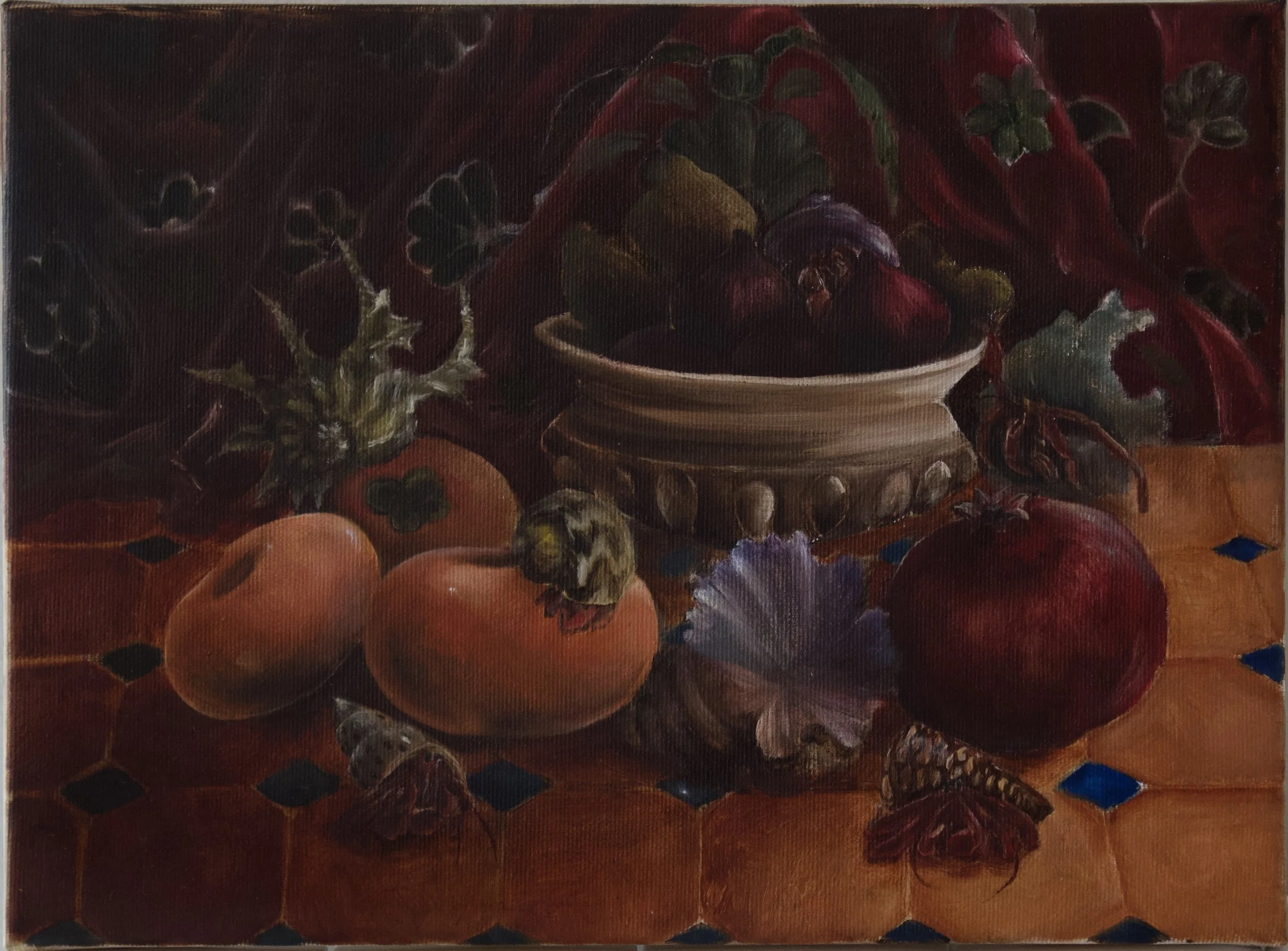
Arab carribean
In the late 19th century, Arabic immigrants emigrated from the Ottoman Empire to the Caribbean. As a result the Caribbean economy grew rapidly, it’s political landscape morphed, and it established an Arab diaspora throughout the Americas.
The persimmons, pomegranate, and figs represent the Levant.
The hermit crabs are native to the Caribbean Islands.
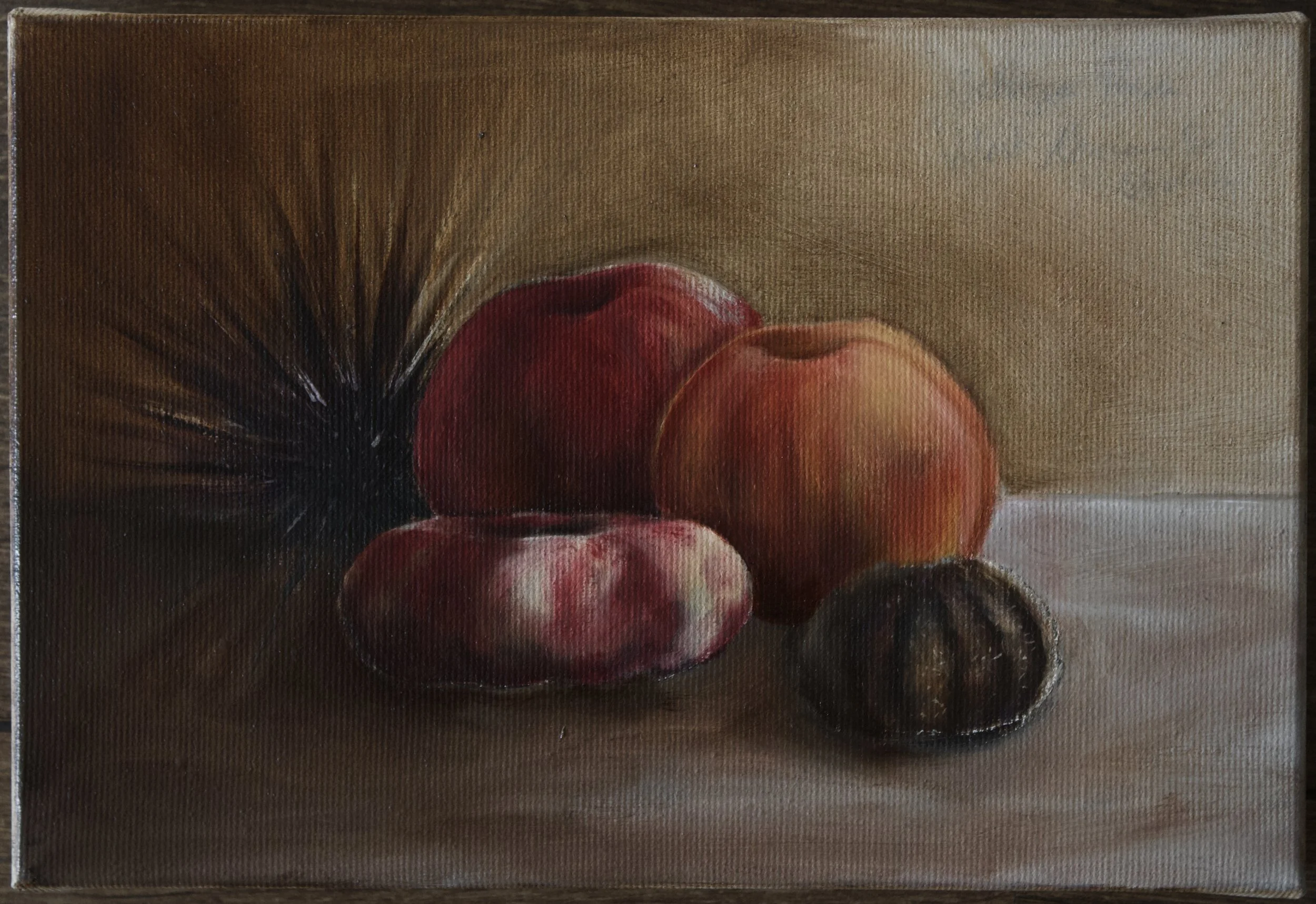
North American
Slave Trade
Over 200 years of American history is marked by the enslavement of West and West-Central Africans. From 1619 to 1865 hundreds of thousands of enslaved Africans built the Southern economy, all while being abused, mutilated, tortured, and murdered. A prominent stain in America’s history that caused ever lasting trauma and resentment, social hierarchy, political tension, & economic disparities.
Peaches represent the state of Georgia, United States of America. Sea Urchins represent West Africa
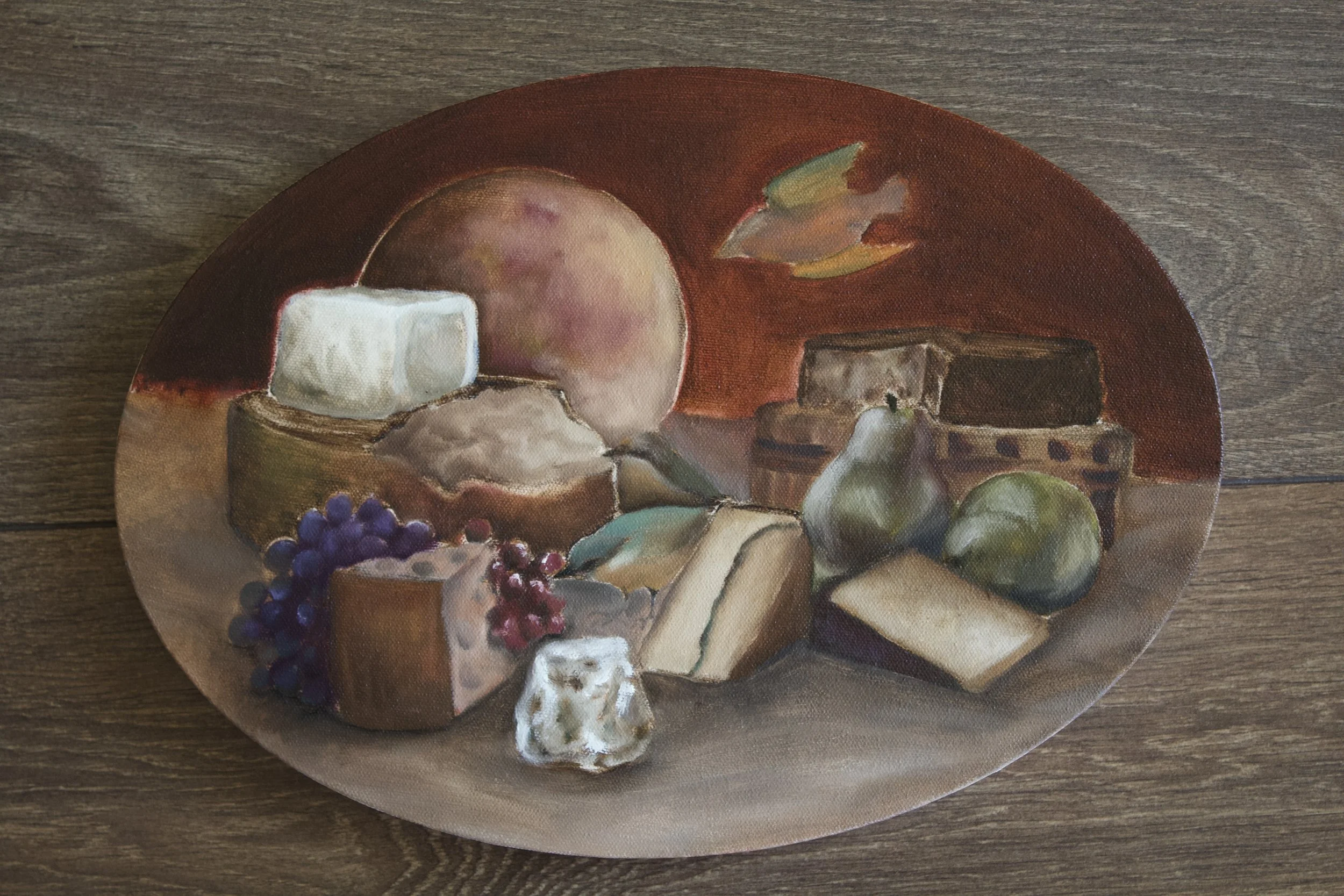
French colonization
of Algeria
French colonization of Algeria lasted 132 years, until 1954 when Algeria rebelled in an 8 year long war. In 1962 Algeria gained its independence, but the effects of French occupation continue to cause resentment, political disagreements, and cultural clashes between the Algerian diaspora in France.
Cheese represents France.
Algerian Nuthatch (bird) represents Algeria